Friday, November 9, 2018

Our Hearts Are Filled With Gratitude


Students unite to show their red-white-blue leather bracelets symbolizing their gratitude for our nation's greatest heroes.

Before departing for the long weekend, students took some time to learn about the meaning of Veterans Day, acknowledging the men and women who have bravely served or are currently serving in the U.S. Armed Forces; to recognize and thank them for their patriotism and their willingness to serve and sacrifice in order to protect us, our freedoms, and our liberties.

After reading the story titled The Wall by Eve Bunting, students created faux wall rubbings (inspired by the story's tribute to the Vietnam Memorial) and wrote letters of appreciation to veterans, which are being mailed to Boxford American Legion Post 379. Students also made red-white-blue leather bracelets, symbolizing their support of them. Ask your child to share their knowledge about this important day with you and how they plan to honor our military men and women.

THANK YOU, veterans - past, present and future - for your service to our beloved country. 

REMINDER: The Boxford Veterans Day Parade will begin at 11:00am on Sunday, November 11, 2018, at the James L. Melvin Green, located at the corner of Elm St. and Topsfield Rd. A brief ceremony will follow commemorating the 100th Anniversary of World War I.

Wednesday, November 7, 2018

Setting Sail for the New World


The official launch to our "Establishing a Colony" project-based learning (PBL) unit took place on Monday.  Since then, "colonists" (aka students) in each of the classes have been preparing for their journeys. They've declared their motives for colonization in the New World, have secured their respective sponsors and have drafted their colony compacts. I've had the pleasure of observing some outstanding examples of effective collaboration as colonists worked together to draft colony laws and elect (or in some cases appoint) governors/leaders. They're off to a great start. Colonists are now in the process of analyzing and evaluating geographical features along the east coast of the New World to determine the best possible location for their settlements. Their motives are clearly driving their thinking (so great to see this level of deep and meaningful thinking!).  

Interested in learning about their motives for colonization? They are as follows:

Colony V (Mrs. Valzania's homeroom colony - official name TBD) motive for colonization: ECONOMIC (to prosper as individuals and to increase the economic wealth of their British investor)

Colony B (Mrs. Bouffard's homeroom colony - official name TBD) motive for colonization: POLITICAL (to weaken Spain's military by establishing British military and naval outposts and claim new territory)

Colony C (Mrs. Cummings' homeroom colony - official name TBD) motive for colonization: SOCIAL and ECONOMIC (to seek adventure and explore new territories, own land and prosper, and to repay their investor with resources to trade back in England) 

Stay tuned for future updates as these self-proclaimed swashbucklers prepare to "break ground" and begin the construction of their colonies later this week!    
"Colonists" use Google Maps along with their hard data from prior research of the New World's east coast region as they analyze and evaluate the best possible location for their settlements. 

Friday, October 26, 2018

Inference Detectives

Curiosity is a powerful drive. It's this essential "school-fuel" that motivates students to learn or accomplish something new for the reward of simply having mastered it.  It's this same curiosity that becomes an essential component in developing successful readers. 

Research has shown that one of the most important strategies we can teach young readers is inferential thinking. Inference strategies are typically structured around missing information or confusing situations, so they naturally raise curiosity. Inferential thinking is critical to understanding text, particularly so as texts and topics become increasingly complex throughout a student's academic career (and perhaps life, in general). What starts as learning about basic inferences in text such as character thoughts and feelings, evolves into more complex inferences about the author's purpose or message. Strong inference-making skills allow for a deeper understanding of the text by grasping the subtle underlying meanings and associations in it. As such, it's important for students to be offered frequent opportunities to practice and transfer these skills to a variety of texts or topic. 


During one particular class, we used thoughtfully-structured mystery stories to help further develop this important strategy.  The quest was to figure out: What is actually happening in this story that the author isn't explicitly telling us?  How can I use text clues + my own schema (background knowledge) to determine what the author is trying to show or say?


Let's now cut-to-scene: Law & Order background music, lights off, flashlights in hand. FBI Director Valzania distributes confidential case files to her special agents, assigning them the task of using their inference-making skills to solve a series of mysteries. The room is brimming with curiosity and a strong motivation to collaborate with partners in drawing inferences about their cases. It's not often that we get a behind-the-scenes look at the FBI's investigative workings. Here's a special sneak peek.


ascd.org. N.p., n.d. Web. 26 Oct. 2018.
<http://www.ascd.org/publications/books/112027/chapters/Section-1@-Why-Inference¢.aspx>.

ascd.org. N.p., n.d. Web. 26 Oct. 2018.
<http://www.ascd.org/publications/books/112027/chapters/Section-1@-Why-Inference¢.aspx>.

literarydevices.net. N.p., n.d. Web. 26 Oct. 2018.
<https://literarydevices.net/inference/>.

Featured Article

And We Danced

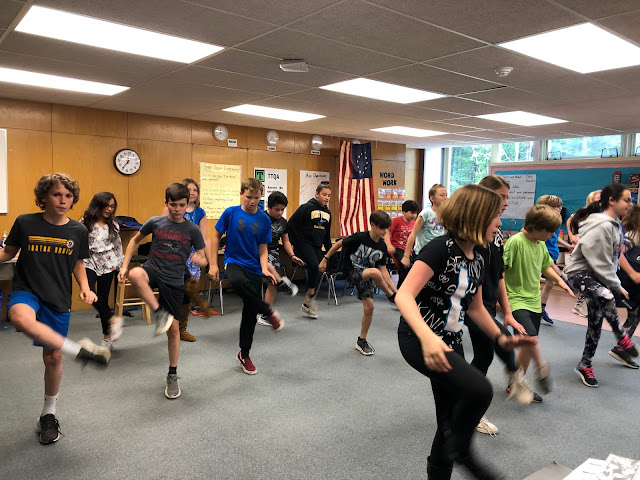
It looks like westward expansion is about to spark a divide across the new nation, as settlers moving into the western frontier debate the ...